ECT Oekotoxikologie GmbH
  • Home
  • About Us
    • Our expertise
    • Management
    • Activities in SETAC
    • Good Laboratory Practice (GLP)
  • Testing
    • Analytical chemistry
    • Aquatic Organisms
    • Sediment Organisms
    • Terrestrial Organisms
    • Dung Organisms
    • Bioaccumulation
    • Environmental Fate
    • Taxonomy
    • Waste
    • Wastewater
  • Consultancy
    • Industrial Chemicals
    • Pharmaceuticals
    • Biocides
    • Plant Protection Products
    • Mixtures
    • Waste
    • Organisation of Workshops & Meetings
    • Training Activities
  • Standardisation
    • OECD activities
    • ISO activities
    • Other standardisation organisations
  • Research
    • Current research projects
    • Projects supported by the European Union (EU)
    • Projects supported by German organisations
    • Projects supported by other organisations
    • All projects
    • Publications
  • News
  • Click to open the search input field Click to open the search input field Search
  • Menu Menu
You are here: Home1 / Research2 / Projects supported by German organisations

Ecotoxicological joint effects of mixtures – relevance and appropriate consideration in the environmental risk assessment of plant protection products and biocides

January 2011

The aim of this project was to assess the relevance of joint effects related to plant protection products and biocidal products. Based on a general analysis of the concepts of mixture toxicity and their application, as well as a detailed analysis of the current environmental risk assessment schemes and their limitations, options were developed for […]

Read more →

Potential substances of very high concern based on environmental protection criteria of the REACH regulation: Verification by substance properties and prioritisation by relevance criteria

January 2011

The REACH Regulation No. 1907/2006 introduced the concept of substances of very high concern (SHVC; Art. 57) for the control of risks to human health and the environment. In this project, the focus was on environmental concerns according to Art. 57(d) to 57(f): • Persistent, bioaccumulating and toxic substances (PBT; Art. 57(d)) • Very persistent and […]

Read more →

Development of ecotoxicological tests with biocides and eluates: verification of the suitability of the embryo test with the zebrafish (Danio rerio, DarT)

January 2011

The project explored the suitability of the fish embryo toxicity test with the zebrafish, Danio rerio, (DarT) as a tool to screen for additive and non-additive effects among biocidal substances. Five biocidal products from the product type 8 (curative and preventive wood preservatives) and their individual active substances were tested in the DarT. Overall, the […]

Read more →

Review and enhancement of new risk assessment concepts under REACH

January 2011

Within REACH, it is possible to waive standard tests that would be required for a chemical, if the available information from other tests and / or non-testing information (e.g. QSARs, grouping, read across) is considered sufficient to draw a reliable conclusion on the endpoint of concern. This concept is described as non-testing approach in the […]

Read more →

Determination and analysis of the soil quality in the context of the implementation and further development of the National Strategy on Biodiversity

January 2011

The aim of this project was the improvement of the preconditions for the protection of the habitat function of soil as described in § 2 of the German Federal Soil Protection Act (1998), in particular in two ways: first, suitable biological indicators (i.e. organism groups) for the assessment of soil quality had to be identified. […]

Read more →

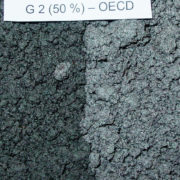
Identification of wastes hazardous to the environment in mirror entries

January 2011

The ecotoxicological characterisation of waste according to the European List of Wastes (Decision 2000/532/EC) is part of the assessment as hazardous or non-hazardous. So far, guidance is lacking regarding the evaluation of the hazard property ‘ecotoxic’ (HP 14; formerly H 14) using biotests. Based on the recommendations of EN 14735 and experiences made in an […]

Read more →

Investigation of sublethal endpoints in dung organisms as a prerequisite for the implementation of terrestrial ecotoxicological studies within the environmental risk assessment of veterinary pharmaceuticals

January 2011

The aims of this project were the compilation and publication of the results of workshops with international dung fauna experts (Aveiro group) and the further improvement of existing laboratory tests with dung beetles and dung flies. Two publications were prepared: first, recommendations for the preparation, performance and assessment of field studies with dung organisms, and […]

Read more →

Examination of soil values with regard to protection of soil organisms and validation of soil assessment methods

January 2011

On the basis of ecotoxicological tests performed with soil organisms, recommendations for precautionary values were given for 16 metals and 10 organics. In the case of three substances (antimony, beryllium, vanadium), the amount of data was not sufficient for such a derivation, while for arsenic, lead, cadmium, chromium, cobalt, copper, molybdenum, nickel, mercury, selenium, thallium, […]

Read more →

Environmental risk assessment of veterinary medicines: Are there data gaps and how can the new legal requirement be met?

January 2011

The most likely entry pathways of veterinary medicinal products (VMPs) into the environment are via slurry or manure from intensively reared animals to soil, and via dung or urine from animals grazing on pasture. Surface water may be contaminated via run-off or leaching and drainage, or  by direct excretion of pasture animals into water. According […]

Read more →

Relevance of endocrine disrupting substances and pharmaceuticals for surface waters – Reassessment of occurrence, development of concepts for monitoring and measures to reduce entry into surface waters

January 2011

The aim of the project was to evaluate the environmental relevance of potential endocrine disrupters in surface waters by comparing measured concentrations of the respective substances to newly proposed environmental quality standards (EQS). As a key action of the  European Commission’s strategy for endocrine disrupting chemicals, 564 potential endocrine disrupters had been listed. Further 88 […]

Read more →
Page 4 of 512345

Find us at

ECT Oekotoxikologie GmbH
Böttgerstraße 2 – 14
65439 Flörsheim am Main
Germany

Phone: +49 6145 9564-0
Fax: +49 6145 9564-99

About ECT

ECT Oekotoxikologie GmbH was founded as a privately owned, independent enterprise in 1993, and joined the SynTech Research Group in November 2021.

In compliance with Good Laboratory Practice (GLP), we perform standardised ecotoxicological tests in the laboratory as well as at semi-field and field level.

An overview of the ecotoxicology services provided by the whole SynTech Research Group is given here.

Recent Posts

  • Meet ECT and the SynTech Research Group at the SETAC Europe 36th Annual Meeting
  • New publications on the effects of plant protection products on soil organisms
  • New project: Soil biodiversity baseline survey

Pages

  • Testing
  • Consultancy
  • Standardisation
  • Research
  • News
  • Jobs
  • About Us

Find us at

ECT Oekotoxikologie GmbH
Böttgerstraße 2 – 14
65439 Flörsheim am Main
Germany

Phone: +49 6145 9564-0
Fax: +49 6145 9564-99

©2011-2026 ECT Oekotoxikologie GmbH. All rights reserved • Webdesign: inspiras Webagentur Frankfurt
  • Home
  • Imprint
  • Privacy Policy
  • Photo credits
Scroll to top Scroll to top Scroll to top