ECT Oekotoxikologie GmbH
  • Home
  • About Us
    • Our expertise
    • Management
    • Activities in SETAC
    • Good Laboratory Practice (GLP)
  • Testing
    • Analytical chemistry
    • Aquatic Organisms
    • Sediment Organisms
    • Terrestrial Organisms
    • Dung Organisms
    • Bioaccumulation
    • Environmental Fate
    • Taxonomy
    • Waste
    • Wastewater
  • Consultancy
    • Industrial Chemicals
    • Pharmaceuticals
    • Biocides
    • Plant Protection Products
    • Mixtures
    • Waste
    • Organisation of Workshops & Meetings
    • Training Activities
  • Standardisation
    • OECD activities
    • ISO activities
    • Other standardisation organisations
  • Research
    • Current research projects
    • Projects supported by the European Union (EU)
    • Projects supported by German organisations
    • Projects supported by other organisations
    • All projects
    • Publications
  • News
  • Click to open the search input field Click to open the search input field Search
  • Menu Menu
You are here: Home1 / Research2 / Projects supported by German organisations

GBIF Information System Soil Zoology. Coordination of national and international assessment for the organism groups Lumbricidae and Enchytraeidae (Edaphobase II)

June 2015

In this joint research project, ECT is responsible for the improvement of existing and the development of new methodological standards regarding collection, storage and usage of data in the German central data base on soil biology, Edaphobase. Besides taxonomy and biogeography the functional role of soil organisms (e.g. via gathering traits of at least the […]

Read more →

Transformation of veterinary pharmaceuticals and biocides in liquid manure

June 2015

Veterinary medicinal products administered to animals are excreted with urine and faeces. For animals housed in stables, the resulting manure is collected and stored before being spread onto agricultural land. Disinfection products used to sanitize stables are also transferred into the manure. Therefore, the spreading of manure is an important pathway of introducing veterinary medicines, […]

Read more →
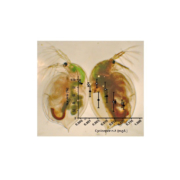
Comparison of the environmental properties of parasiticidesK. Duis

Comparison of the environmental properties of parasiticides and harmonisation of the basis for environmental assessment at the EU level

February 2015

Avermectin and milbemycin parasiticides have a high toxicity to non-target organisms, are often persistent and may have a potential to bioaccumulate. The present project contributes to filling gaps in the database for a complete environmental risk assessment of these parasiticides. In addition, risk management strategies for parasiticides used in pasture animals were discussed. For ivermectin […]

Read more →

Necessity of testing biocidal products and their eluates within the authorisation process aiming at an adequate environmental evaluation of mixtures

March 2014

In the authorisation process of biocidal products, the joint effects of the product components (active substances and relevant additives) shall be taken into account in the environmental risk assessment according to the relevant regulatory guidance. The concept of concentration addition (CA) is the proposed default model for this assessment. Open questions in this context are […]

Read more →

Joint effects of pharmaceuticals and industrial chemicals from wastewater treatment plant effluents – evaluating concepts for a risk assessment using experimental scenarios

March 2014

The aim of this project is to develop and evaluate concepts for a risk assessment of wastewater effluents taking into account the joint effects of chemicals, which are not completely eliminated in the wastewater treatment process. The focus is on pharmaceutical residues and industrial chemicals, particularly those that are frequently detected in effluents. The predictability […]

Read more →
Characterization, communication and minimization of risks originating from emerging contaminants and pathogens in the water cycle (TransRisk)L. Schlüter-Vorberg

Characterization, communication and minimization of risks originating from emerging contaminants and pathogens in the water cycle (TransRisk)

December 2012

The presence of emerging contaminants and pathogens in the water cycle may pose a risk to humans and the environment. It is known that municipal wastewater treatment plants currently cannot remove all pathogens and anthropogenic micropollutants such as drug residues, cosmetics, or additives of food and industrial products from the wastewater. Advanced treatment methods such […]

Read more →

Comparison of the dung and soil fauna on ivermectin-treated and untreated meadows as an example of the effects of a veterinary drug

June 2011

The application of veterinary medical products to livestock can affect soil organisms in manure-amended fields and, especially, organisms colonising the dung of treated animals, thereby potentially delaying the degradation of dung on pastures. For this reason, the authorisation process for veterinary medical products in the European Union includes a requirement for higher-tier tests when adverse effects on dung organisms are observed in lower tier toxicity tests. An international research project was performed…

Read more →

Validation of a sediment bioaccumulation test with endobenthic aquatic oligochaetes by an international ring test

January 2011

The aim of the project was the validation of a sediment bioaccumulation test with endobenthic oligochaetes by an international ring test. The test method was developed taking into account existing methods (UBA-reports 298 67 419 (1999) and 206 03 106/03 (1999)). A test protocol was prepared and used to run the test. A total of […]

Read more →

Validation of a sediment toxicity test with the endobenthic aquatic oligochaete Lumbriculus variegatus by an international ring test

January 2011

The aim of the project was the validation of a sediment toxicity test with the benthic oligochaete Lumbriculus variegatus by an international ring test. The test method was developed taking into account existing methods. A test protocol was prepared and used to run the test. A total of 14 institutions (governmental agencies, universities, contract laboratories […]

Read more →

Preparation of a test guideline – Hypoaspis reproduction test – in particular for the assessment of plant protection products

January 2011

The aim of this project, which was supported by the German Environment Agency (UBA), was to standardise and validate a test guideline using soil predatory mites, a Hypoaspis reproduction test. Testing effects of plant protection products on predatory soil mites may be needed for the listing of an active substance in Annex I of EU […]

Read more →
Page 2 of 512345

Find us at

ECT Oekotoxikologie GmbH
Böttgerstraße 2 – 14
65439 Flörsheim am Main
Germany

Phone: +49 6145 9564-0
Fax: +49 6145 9564-99

About ECT

ECT Oekotoxikologie GmbH was founded as a privately owned, independent enterprise in 1993, and joined the SynTech Research Group in November 2021.

In compliance with Good Laboratory Practice (GLP), we perform standardised ecotoxicological tests in the laboratory as well as at semi-field and field level.

An overview of the ecotoxicology services provided by the whole SynTech Research Group is given here.

Recent Posts

  • Renewed approval for R&D activities for private companies
  • Meet ECT and the SynTech Research Group at the SETAC Europe 36th Annual Meeting
  • New publications on the effects of plant protection products on soil organisms

Pages

  • Testing
  • Consultancy
  • Standardisation
  • Research
  • News
  • Jobs
  • About Us

Find us at

ECT Oekotoxikologie GmbH
Böttgerstraße 2 – 14
65439 Flörsheim am Main
Germany

Phone: +49 6145 9564-0
Fax: +49 6145 9564-99

©2011-2026 ECT Oekotoxikologie GmbH. All rights reserved • Webdesign: inspiras Webagentur Frankfurt
  • Home
  • Imprint
  • Privacy Policy
  • Photo credits
Scroll to top Scroll to top Scroll to top