ECT Oekotoxikologie GmbH
  • Home
  • About Us
    • Our expertise
    • Management
    • Activities in SETAC
    • Good Laboratory Practice (GLP)
  • Testing
    • Analytical chemistry
    • Aquatic Organisms
    • Sediment Organisms
    • Terrestrial Organisms
    • Dung Organisms
    • Bioaccumulation
    • Environmental Fate
    • Taxonomy
    • Waste
    • Wastewater
  • Consultancy
    • Industrial Chemicals
    • Pharmaceuticals
    • Biocides
    • Plant Protection Products
    • Mixtures
    • Waste
    • Organisation of Workshops & Meetings
    • Training Activities
  • Standardisation
    • OECD activities
    • ISO activities
    • Other standardisation organisations
  • Research
    • Current research projects
    • Projects supported by the European Union (EU)
    • Projects supported by German organisations
    • Projects supported by other organisations
    • All projects
    • Publications
  • News
  • Click to open the search input field Click to open the search input field Search
  • Menu Menu
You are here: Home1 / News2 / New publication: Uptake and effects of the beta‐adrenergic agonist salbutamol i...
Uptake and effects of the beta‐adrenergic agonist salbutamol in fish: supporting evidence for the fish plasma modelK. Duis

New publication: Uptake and effects of the beta‐adrenergic agonist salbutamol in fish: supporting evidence for the fish plasma model

August 2019

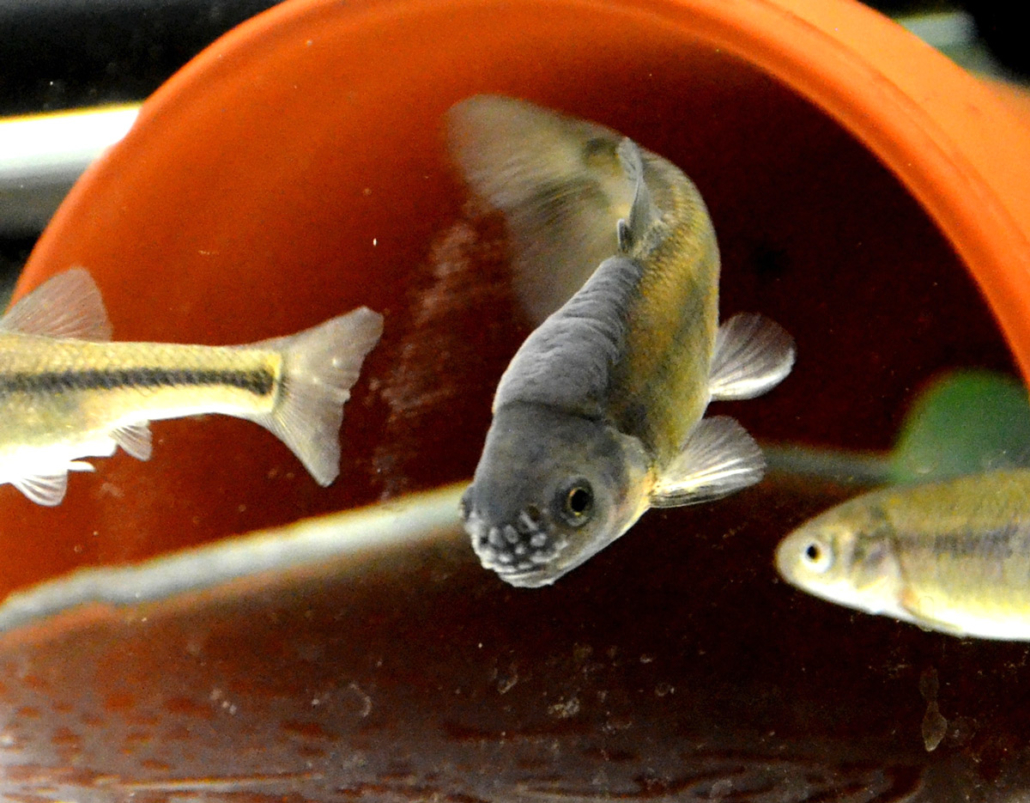
The fish plasma model predicts the fish blood plasma concentration of a pharmaceutical from the water concentration to which the fish is exposed and compares it to the human therapeutic plasma concentration with the postulate that no adverse toxic effects occur below this concentration. The present study provides several lines of evidence supporting the fish plasma model for the beta‐adrenergic agonist salbutamol, a small, at ambient pH cationic molecule. Salbutamol exhibited very low acute toxicity to early and adult life stages of fathead minnows (Pimephales promelas). Biomass reduction in fish early life stages was the most sensitive apical endpoint, with no observed effect concentrations (NOECs) in the low mg/L range upon continuous exposure for up to 120 days. Given that predicted and measured environmental concentrations are at least 1000‐fold lower, the risk of salbutamol in freshwater is deemed very low. Increase of heart beat rate and decrease of total triglyceride content in fish also occurred in the low mg/L range and resembled effects known from humans. This supports the fish plasma model assumption of conserved targets in fish with similar functionality. Plasma concentrations measured in adult and juvenile fish exposed to water concentrations around the NOECs exceeded the human therapeutic plasma concentration and approached plasma concentrations toxic to humans. This confirms for salbutamol the fish plasma model hypothesis that no adverse, i.e. population‐relevant, toxic effects occur in fish below the human therapeutic plasma concentration.

For additional information, see the publication in Environmental Toxicology and Chemistry:

Weil, M., Falkenhain, A.-M., Scheurer, M., Ryan, J.J., Coors, A. (2019). Uptake and effects of the beta‐adrenergic agonist salbutamol in fish: supporting evidence for the fish plasma model. Environmental Toxicology and Chemistry in press.

For further new publications, see ECT’s publication list.

Tags: fathead minnow, fish plasma model, human therapeutic plasma concentration, Pimephales promelas, salbutamol

Our experts

Dr. Mirco Weil
Phone: +49 6145 9564-11
Mail Contact

Dr. Anja Coors
Phone: +49 6145 9564-20
Mail Contact

Find us at

ECT Oekotoxikologie GmbH
Böttgerstraße 2 – 14
65439 Flörsheim am Main
Germany

Phone: +49 6145 9564-0
Fax: +49 6145 9564-99

About ECT

ECT Oekotoxikologie GmbH was founded as a privately owned, independent enterprise in 1993, and joined the SynTech Research Group in November 2021.

In compliance with Good Laboratory Practice (GLP), we perform standardised ecotoxicological tests in the laboratory as well as at semi-field and field level.

An overview of the ecotoxicology services provided by the whole SynTech Research Group is given here.

Recent Posts

  • Renewed approval for R&D activities for private companies
  • Meet ECT and the SynTech Research Group at the SETAC Europe 36th Annual Meeting
  • New publications on the effects of plant protection products on soil organisms

Pages

  • Testing
  • Consultancy
  • Standardisation
  • Research
  • News
  • Jobs
  • About Us

Find us at

ECT Oekotoxikologie GmbH
Böttgerstraße 2 – 14
65439 Flörsheim am Main
Germany

Phone: +49 6145 9564-0
Fax: +49 6145 9564-99

©2011-2026 ECT Oekotoxikologie GmbH. All rights reserved • Webdesign: inspiras Webagentur Frankfurt
  • Home
  • Imprint
  • Privacy Policy
  • Photo credits
Link to: Review: Environmental risk assessment of pesticides in tropical terrestrial ecosystems Link to: Review: Environmental risk assessment of pesticides in tropical terrestrial ecosystems Review: Environmental risk assessment of pesticides in tropical terrestrial...J. Römbke Link to: ECT at 24th SETAC GLB Annual meeting Link to: ECT at 24th SETAC GLB Annual meeting ECT at 23rd SETAC GLB Annual meetingK. DuisECT at 24th SETAC GLB Annual meeting
Scroll to top Scroll to top Scroll to top