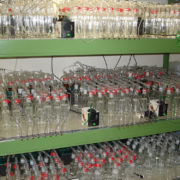
Project report published on ‘Development of a test protocol to study the transformation of veterinary pharmaceuticals and biocides in liquid manure’

For veterinary medicinal products manure application onto agriculturally used soils is their main path of entry into the environment. Consequently, this path is considered as part of the environment risk assessment. Biocides, which are used for stable disinfection, might also enter the environment via liquid manure. So far, only regulatory guidance (EMA/CVMP/ERA/ 430327/2009) addresses this […]

ECT at the SETAC Europe 25th Annual Meeting

A. Boxall, R. Länge, A. Coors, J. Snape, F. Sanz: iPiE – Intelligence-led assessment of pharmaceuticals in the environment.

A. Coors, F. Sacher, P. Schwartz, C. Polleichtner, U. Kühnen, W. Drost, D. Gildemeister: Azoles from different regulatory frameworks: combined assessment with regard to wastewater effluents.

ECT organises a ring test with dung beetles

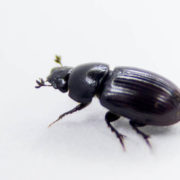
European legislation requires testing of parasiticides using, among others, dung beetles (OECD GD 122). Currently, Aphodius constans, a dweller species, has been approved as a test species for residues in dung. However, results of tests using A. constans may not be relevant for tunneler species.

Two project reports published

The final reports of two projects, ’Substances of very high concern under REACH – an evaluation of uncertainties in the environmental risk assessment of endocrine active substances‘ and ‘Review and enhancement of new risk assessment concepts under REACH‘ have been published.

Lumbriculus test recommended by EFSA

The newly proposed EFSA guidance document on risk assessment for plant protection products for aquatic organisms1 recommends the Lumbriculus test (instead of the Chironomus test) specifically for pesticides with fungicidal activity. ECT coordinated the validation ring test for the Lumbriculus OECD test guideline […]