ECT Oekotoxikologie GmbH
  • Home
  • About Us
    • Our expertise
    • Management
    • Activities in SETAC
    • Good Laboratory Practice (GLP)
  • Testing
    • Analytical chemistry
    • Aquatic Organisms
    • Sediment Organisms
    • Terrestrial Organisms
    • Dung Organisms
    • Bioaccumulation
    • Environmental Fate
    • Taxonomy
    • Waste
    • Wastewater
  • Consultancy
    • Industrial Chemicals
    • Pharmaceuticals
    • Biocides
    • Plant Protection Products
    • Mixtures
    • Waste
    • Organisation of Workshops & Meetings
    • Training Activities
  • Standardisation
    • OECD activities
    • ISO activities
    • Other standardisation organisations
  • Research
    • Current research projects
    • Projects supported by the European Union (EU)
    • Projects supported by German organisations
    • Projects supported by other organisations
    • All projects
    • Publications
  • News
  • Click to open the search input field Click to open the search input field Search
  • Menu Menu
You are here: Home1 / Research
CNT-based nanoporous membranes for treatment of wastewater and process waters

CNT-based nanoporous membranes with high flux for energy-efficient treatment of wastewater and process waters from natural gas and crude oil processing industries

October 2017

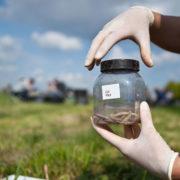
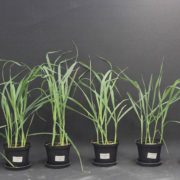
Carbon nanotubes (CNT) represent an important group in the class of carbon-based nanomaterials. Their physical characteristics make them highly suitable for use in filtration methods, and lab-scaled applications have been very promising. However, large-scale CNT-based nanoporous membranes for application in industrial processes are not yet available. The objective of the present project is the development […]
Read more →
Adaptation of the current earthworm field study guideline

Adaptation of the current earthworm field study guideline to harmonise field testing and risk evaluation for earthworms

September 2017

This project has three aims: (1) to compile and critically evaluate standardised earthworm field studies in order to optimise the current test design, (2) to perform a pilot earthworm field study following the improved test design, and (3) to prepare an OECD draft guidance document. After having discussed different design options within the OECD-GSIG expert […]

Read more →
Development of an ecotoxicological assessment concept for contaminants based on their bioavailability in soils with different filter und buffer properties

Development of an ecotoxicological assessment concept for contaminants based on their bioavailability in soils

August 2017

The German Soil Protection Ordinance defines precautionary values for seven metals/metalloids which, if exceeded, indicate that concern for a harmful soil change exists. All precautionary values given in the German Soil Protection Ordinance are based on total concentrations (aqua regia extraction). However, total metal/metalloid concentrations do not represent the actual exposure of soil organisms to […]

Read more →

Development and standardisation of an ecotoxicological test method for the environmental risk assessment of genetically modified plants

July 2016

Prior to releasing a genetically modified plant (GMP) into the environment and placing it on the market in the European Union (EU), an environmental risk assessment (ERA) according to EU Directive 2001/18/EC has to be performed. Current testing of the effects of GMPs on non-target organisms is mainly based on ecotoxicological test methods that were […]

Read more →

GBIF Information System Soil Zoology. Coordination of national and international assessment for the organism groups Lumbricidae and Enchytraeidae (Edaphobase II)

June 2015

In this joint research project, ECT is responsible for the improvement of existing and the development of new methodological standards regarding collection, storage and usage of data in the German central data base on soil biology, Edaphobase. Besides taxonomy and biogeography the functional role of soil organisms (e.g. via gathering traits of at least the […]

Read more →

Improved strategy to assess chemical persistence at the water-sediment interface

June 2015

The environmental fate of a compound is determined by transformation and distribution processes, which are strongly dependent on the specific environmental conditions. Biodegradability of chemicals in different environmental compartments is one of the major determinants of their environmental fate and therefore plays a crucial role in regulatory decision-making. Simulation studies according to OECD 308 (aquatic […]

Read more →

Transformation of veterinary pharmaceuticals and biocides in liquid manure

June 2015

Veterinary medicinal products administered to animals are excreted with urine and faeces. For animals housed in stables, the resulting manure is collected and stored before being spread onto agricultural land. Disinfection products used to sanitize stables are also transferred into the manure. Therefore, the spreading of manure is an important pathway of introducing veterinary medicines, […]

Read more →
iPiE logo

Intelligence-led Assessment of Pharmaceuticals in the Environment (iPiE)

May 2015

Active pharmaceutical ingredients (APIs) of medicines for human use can be released to the environment during the manufacturing process, following use by patients or when unused medicines are disposed of in an incorrect manner. As APIs are biologically active compounds, concerns have been raised about the potential effects of APIs in the environment on human […]

Read more →
Comparison of the environmental properties of parasiticidesK. Duis

Comparison of the environmental properties of parasiticides and harmonisation of the basis for environmental assessment at the EU level

February 2015

Avermectin and milbemycin parasiticides have a high toxicity to non-target organisms, are often persistent and may have a potential to bioaccumulate. The present project contributes to filling gaps in the database for a complete environmental risk assessment of these parasiticides. In addition, risk management strategies for parasiticides used in pasture animals were discussed. For ivermectin […]

Read more →

Necessity of testing biocidal products and their eluates within the authorisation process aiming at an adequate environmental evaluation of mixtures

March 2014

In the authorisation process of biocidal products, the joint effects of the product components (active substances and relevant additives) shall be taken into account in the environmental risk assessment according to the relevant regulatory guidance. The concept of concentration addition (CA) is the proposed default model for this assessment. Open questions in this context are […]

Read more →
Page 2 of 7‹1234›»

Find us at

ECT Oekotoxikologie GmbH
Böttgerstraße 2 – 14
65439 Flörsheim am Main
Germany

Phone: +49 6145 9564-0
Fax: +49 6145 9564-99

About ECT

ECT Oekotoxikologie GmbH was founded as a privately owned, independent enterprise in 1993, and joined the SynTech Research Group in November 2021.

In compliance with Good Laboratory Practice (GLP), we perform standardised ecotoxicological tests in the laboratory as well as at semi-field and field level.

An overview of the ecotoxicology services provided by the whole SynTech Research Group is given here.

Recent Posts

  • Renewed approval for R&D activities for private companies
  • Meet ECT and the SynTech Research Group at the SETAC Europe 36th Annual Meeting
  • New publications on the effects of plant protection products on soil organisms

Pages

  • Testing
  • Consultancy
  • Standardisation
  • Research
  • News
  • Jobs
  • About Us

Find us at

ECT Oekotoxikologie GmbH
Böttgerstraße 2 – 14
65439 Flörsheim am Main
Germany

Phone: +49 6145 9564-0
Fax: +49 6145 9564-99

©2011-2026 ECT Oekotoxikologie GmbH. All rights reserved • Webdesign: inspiras Webagentur Frankfurt
  • Home
  • Imprint
  • Privacy Policy
  • Photo credits
Scroll to top Scroll to top Scroll to top