
ECT Oekotoxikologie GmbH
  • Home
  • About Us
    • Our expertise
    • Management
    • Activities in SETAC
    • Good Laboratory Practice (GLP)
  • Testing
    • Analytical chemistry
    • Aquatic Organisms
    • Sediment Organisms
    • Terrestrial Organisms
    • Dung Organisms
    • Bioaccumulation
    • Environmental Fate
    • Taxonomy
    • Waste
    • Wastewater
  • Consultancy
    • Industrial Chemicals
    • Pharmaceuticals
    • Biocides
    • Plant Protection Products
    • Mixtures
    • Waste
    • Organisation of Workshops & Meetings
    • Training Activities
  • Standardisation
    • OECD activities
    • ISO activities
    • Other standardisation organisations
  • Research
    • Current research projects
    • Projects supported by the European Union (EU)
    • Projects supported by German organisations
    • Projects supported by other organisations
    • All projects
    • Publications
  • News
  • Click to open the search input field Click to open the search input field Search
  • Menu Menu
You are here: Home1 / News2 / New publication: Effects of insecticides on survival and reproduction of...
Effects of insecticides on survival and reproduction of microarthropods in African and European soils

New publication: Effects of insecticides on survival and reproduction of microarthropods in African and European soils

January 2018

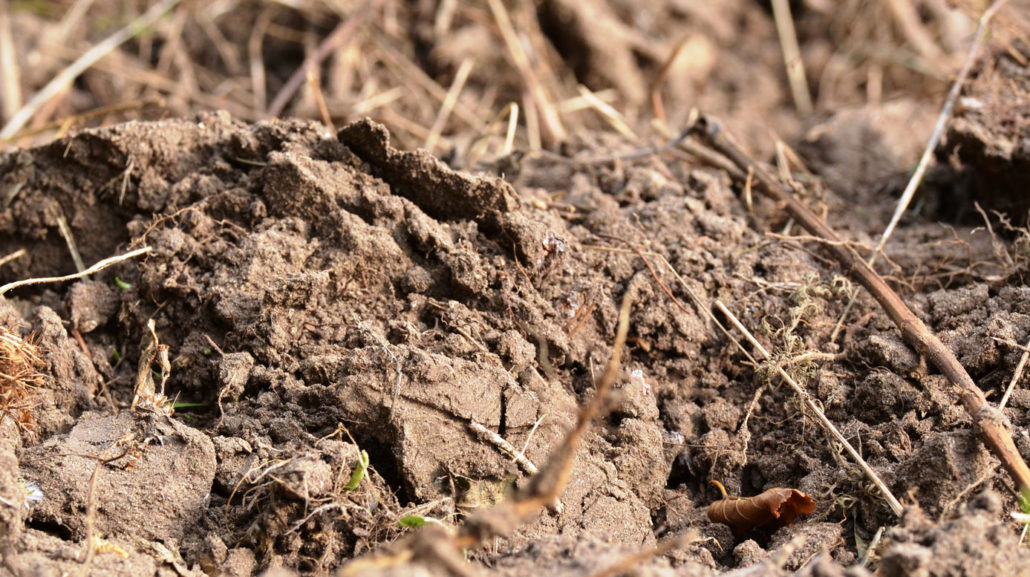
In many parts of Africa, pesticides are used indiscriminately. Yet, ecotoxicological data relevant for the protection of soil organisms have usually been obtained under temperate conditions. In order to assess the effects of three commonly used insecticides (deltamethrin, dimethoate, chlorpyrifos) on microarthropods in African soils, uncontaminated natural soils were collected from Nigeria and Tunisia. In addition, two common test soils (OECD artificial soil and LUFA 2.3 soil) were used in OECD standard reproduction tests. Two microarthropod species, the springtail Folsomia candida and the predatory mite Hypoaspis aculeifer, were exposed in these four soils spiked individually with the insecticides. The collembolan F. candida was more sensitive than the mite H. aculeifer for all three insecticides. The toxicity of each insecticide in the four soils varied, with few exceptions, by less than an order of magnitude. The lowest toxicity was often, but not always, found in OECD artificial soil. Soil- and insecticide-specific patterns of toxicity to F. candida and H. aculeifer might be related to the physicochemical properties of the soils and, thus, to the bioavailability of the insecticides. Following the rules laid down in the European Union for the registration of pesticides and using standard European exposure scenarios, neither an acute nor a chronic risk of dimethoate and chlorpyrifos can be excluded (with few exceptions) in all four soils. Lower risks were identified for deltamethrin. For pesticides used in Africa, an environmental risk assessment based on data gained in tests with at least one additional natural field soil, preferably of African origin, should be performed using the same risk assessment principles as in the European Union.

For additional information, see the publication in Integrated Environmental Assessment and Management:

Jaabiri Kamoun, I., Jegede, O.O., Owojori, O.J., Bouzid, J., Gargouri, R., Römbke, J. (2018). Effects of deltamethrin, dimethoate, and chlorpyrifos on survival and reproduction of the collembolan Folsomia candida and the predatory mite Hypoaspis aculeifer in two African and two European soils. Integrated Environmental Assessment and Management 14, 92-104.

For further new publications, see ECT’s publication list.

Tags: African soil, chlorpyrifos, deltamethrin, dimethoate, ecotoxicity test, environment, Folsomia candida, Hypoaspis aculeifer, terrestrial ecology, terrestrial ecotoxicology, terrestrial invertebrates

Find us at

ECT Oekotoxikologie GmbH
Böttgerstraße 2 – 14
65439 Flörsheim am Main
Germany

Phone: +49 6145 9564-0
Fax: +49 6145 9564-99

About ECT

ECT Oekotoxikologie GmbH was founded as a privately owned, independent enterprise in 1993, and joined the SynTech Research Group in November 2021.

In compliance with Good Laboratory Practice (GLP), we perform standardised ecotoxicological tests in the laboratory as well as at semi-field and field level.

An overview of the ecotoxicology services provided by the whole SynTech Research Group is given here.

Recent Posts

  • Meet ECT and the SynTech Research Group at the SETAC Europe 36th Annual Meeting
  • New publications on the effects of plant protection products on soil organisms
  • New project: Soil biodiversity baseline survey

Pages

  • Testing
  • Consultancy
  • Standardisation
  • Research
  • News
  • Jobs
  • About Us

Find us at

ECT Oekotoxikologie GmbH
Böttgerstraße 2 – 14
65439 Flörsheim am Main
Germany

Phone: +49 6145 9564-0
Fax: +49 6145 9564-99

©2011-2026 ECT Oekotoxikologie GmbH. All rights reserved • Webdesign: inspiras Webagentur Frankfurt
  • Home
  • Imprint
  • Privacy Policy
  • Photo credits
Link to: Further news on the Euro-Mediterranean Conference on Environmental Integration Link to: Further news on the Euro-Mediterranean Conference on Environmental Integration Further news on the Euro-Mediterranean Conference on Environmental Integrat...Further news on the Euro-Mediterranean Conference on Environmental Integration Link to: New publication: Environmental risk assessment of biocidal products – identification of relevant components… Link to: New publication: Environmental risk assessment of biocidal products – identification of relevant components… Environmental risk assessment of biocidal products: identification of relevant componentsNew publication: Environmental risk assessment of biocidal products –...
Scroll to top Scroll to top Scroll to top